
Introduction
The exterior house Designing is far more than choosing colours and materials. It’s a science shaped by nature and executed through thoughtful planning. The way the sun hits a wall, the direction from which winds blow, how rainwater moves across the plot, and how the land rises or slopes — all these elements quietly decide how comfortable, durable, and beautiful a home becomes.
This guide brings every essential concept together in one place. Whether you’re building a new home, renovating an old one, or simply learning, this blog gives you the practical wisdom architects rely on while designing climate-friendly exteriors.
“A home feels good when it breathes with nature — not against it. The exterior is where that relationship begins.”
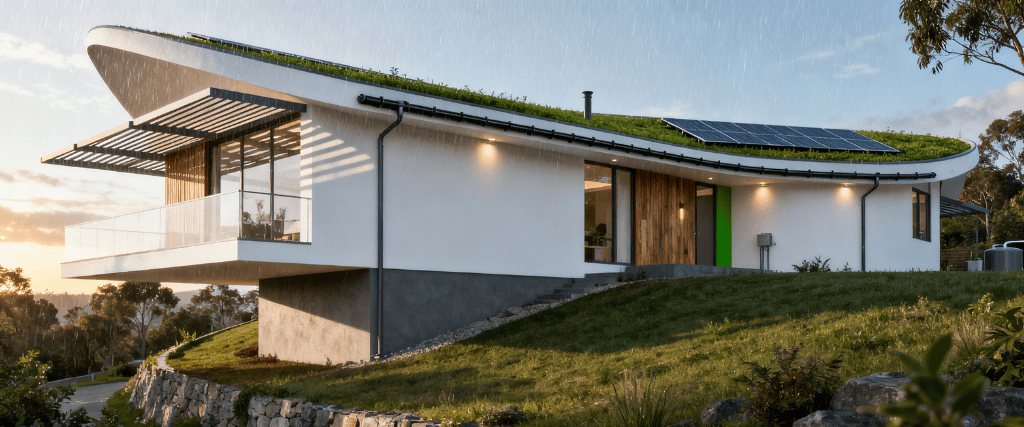
Table of Contents
1. Sun — The Starting Point of Exterior Design
1.1 Introduction
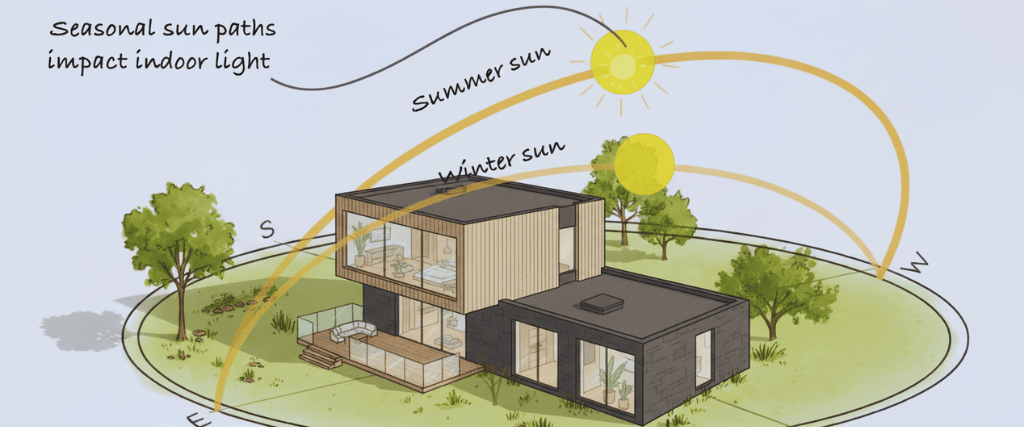
Before a single brick is laid, before you choose colours or materials, and even before you finalize the plot layout, one element silently dictates how your home will feel, look, and perform: the Sun.
The Sun is the architect nature provides. Its journey across the sky influences comfort, lighting, heat, energy efficiency, wall durability, and even the long-term appearance of your home’s exterior.
Understanding sunlight patterns is not optional. It is the foundation of intelligent exterior design.
1.2 Why the Sun Matters in Exterior Design
The exterior design of a house is directly shaped by:
- Heat exposure throughout the year
- Light entering the interiors
- Shadow formation across the building
- Fading and weathering of materials
- Position of windows, verandahs, balconies
- Energy use for cooling and lighting
- Landscaping choices
Every one of these factors depends on the Sun’s direction, angle, and intensity. Ignoring the Sun usually leads to a home that looks beautiful but feels uncomfortable.
Designing with the Sun creates a home that performs, not just impresses.
1.3 Understanding Sun Path
To design exteriors scientifically, we must understand the basics of how the Sun moves.
1.3.1 The Daily Path
- Sunrise in the East
- Moves Southward through the day in India
- Sets in the West
- South-facing sides get the most sunlight
- North-facing sides remain the coolest
1.3.2 Summer vs. Winter
- Summer Sun: High, harsh, nearly overhead — causes heat gain and glare.
- Winter Sun: Low and gentle — ideal for warmth and natural light.
This difference changes how you design shades, pergolas, overhangs, and window sizes.
1.4 Sun’s Impact on Exterior Walls
Every cardinal direction behaves differently:
East
- Bright morning light
- Cooler heat load
- Ideal for bedrooms, gardens, balconies
West
- Harsh evening heat
- Causes maximum exterior fading
- Needs shading devices like vertical louvers
South
- Maximum heat throughout the day
- Needs deeper overhangs, pergolas, heat-resistant materials
North
- Least direct sunlight
- Consistent diffused light
- Ideal for workspaces, studios, and large windows
1.5 Designing Exterior Elements Based on Sunlight
1.5.1 Overhangs and Chajjas
Deep chajjas protect from harsh summer sun while still allowing winter sunlight.
1.5.2 Exterior Colour Selection
- Light colours reduce heat absorption
- Dark colours look premium but get hotter quickly
1.5.3 Window Orientation
Proper orientation improves:
- Light quality
- Cooling
- Privacy
- Aesthetics
1.5.4 Material Selection
Sun determines:
- Which paints fade faster
- Which stones crack
- Which textures stay clean
- Which metals oxidize
1.5.5 Landscaping
Trees placed strategically based on Sun direction act like natural climate controllers.
1.6 Energy Efficiency and the Sun
A well-designed exterior can reduce:
- 20 to 40 percent of cooling costs
- 30 to 50 percent of artificial lighting use
By aligning with the Sun, homes become more comfortable and much more energy efficient.
1.7 Summary
The Sun is not just a light source; it is the core driver of exterior design.
A home that respects the Sun becomes naturally beautiful, naturally comfortable, and naturally efficient.
Designing with Sunlight
Here’s how architects typically use sunlight:
- Place bedrooms or sit-out areas on the east
- Reduce windows on the west to avoid heat
- Use shading or deep overhangs on the south
- Use north-facing windows for stable daylight
2. Wind Direction & Natural Ventilation
2.1 Introduction
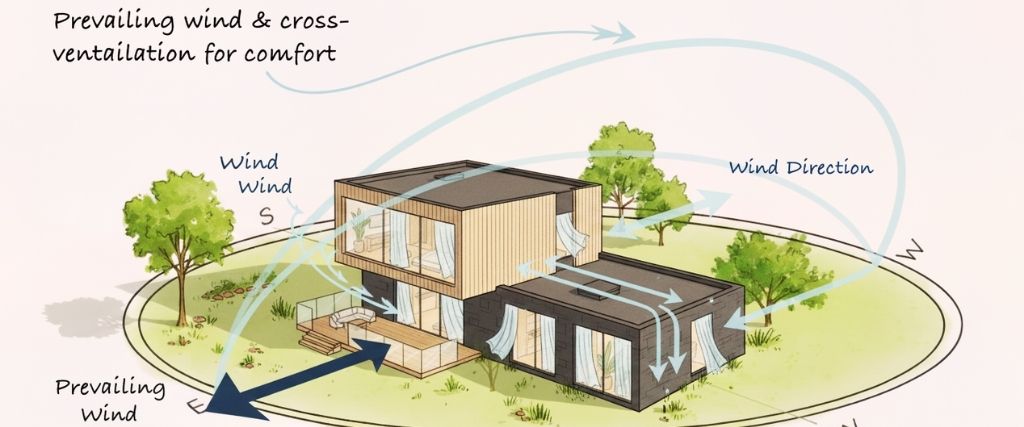
If the Sun shapes the warmth and brightness of a home, wind shapes its comfort, ventilation, freshness, and durability.
Wind direction plays a major role in how a house breathes, cools down, resists moisture, and stays structurally strong for years.
Ignoring wind patterns leads to stuffy interiors, damp corners, and exterior wear and tear.
Understanding wind direction allows a designer to create a home that stays naturally cool and well-ventilated with minimal energy use.
2.2 Understanding Wind Patterns in India
Wind flow changes based on location, season, and surroundings. India experiences two major patterns:
2.2.1 Summer Winds
- Hot winds blow from the west and northwest in many regions.
- Coastal areas experience cool sea breeze in the evenings due to land–sea temperature differences.
- Proper openings in the direction of cool winds can reduce interior temperatures significantly.
2.2.2 Monsoon Winds
- Southwest monsoon winds bring heavy rain and moisture.
- These winds influence the placement of overhangs, roof slopes, rain protection features, and external drainage.
2.2.3 Winter Winds
- Cold winds blow from the north and northeast.
- Exterior openings need to be designed to reduce heat loss during winter in colder regions.
2.3 How Wind Direction Affects Exterior Design
2.3.1 Placement of Windows and Ventilation Gaps
Windows facing the natural breeze direction create cross-ventilation.
Cross-ventilation:
- Removes heat quickly
- Reduces AC usage
- Keeps interiors odour-free
- Balances humidity
Designers must align openings to capture prevailing winds.
2.3.2 Verandahs, Balconies, and Sit-out Spaces
Outdoor living areas should be placed where natural breezes flow gently.
A sit-out that receives fresh air becomes a comfortable family space throughout the year.
2.3.3 Roof Design and Attic Ventilation
Wind direction influences:
- Gable orientation
- Skylight design
- Solar panel placement
- Roof ridge ventilation
Proper airflow prevents heat buildup and moisture damage inside the roof cavity.
2.3.4 Exterior Materials and Wind Exposure
High-speed winds can cause:
- Dust accumulation
- Paint erosion
- Cracks in plaster
- Moisture seepage
- Rust on exterior metals
Homes that face high wind loads require tougher exterior finishes, impact-resistant glass, and strong framing.
2.4 Harnessing Wind for Natural Cooling
Good exterior design uses wind as a cooling tool.
Techniques include:
- Placing large openings on the windward side
- Providing smaller openings on the opposite side for pressure balance
- Adding ventilated façade panels
- Using jalis, louvers, and perforated screens
- Planting trees to guide and direct airflow
This creates a steady flow of cool air that moves across the house.
2.5 Blocking Unwanted Winds
Not all winds are pleasant.
Dusty or stormy winds must be blocked or filtered.
This is done through:
- Windbreak walls
- Dense plantation
- Smaller openings toward harsh wind directions
- Using double-glazed windows in exposed zones
- Adding buffer spaces such as utility areas on wind-exposed sides
2.6 Wind and Moisture Control
Wind-driven rain is a major reason for exterior wall damage and leakage.
Design responses include:
- Proper chajjas
- Deep sill projections
- Weather-resistant paints
- Water-repellent plaster
- Sloped roofs in heavy rainfall areas
Understanding wind direction helps ensure the house remains dry even in strong monsoons.
2.7 Landscaping and Wind Flow
Trees, hedges, and boundary walls guide wind flow.
Good landscaping can:
- Push cool breeze inside
- Reduce the impact of hot winds
- Block dust
- Create shaded pockets
- Reduce noise entering the home
The right landscape design makes the entire exterior microclimate more pleasant.
2.8 Summary
Wind direction is a living force that interacts with every part of a home’s exterior.
A well-designed house reads the winds, aligns with them, and shapes its opening, materials, and form accordingly. This leads to natural comfort, durability, and a healthier environment.
Designing for Breeze
- Keep larger windows on the windward side
- Create cross-ventilation paths
- Use jalis or louvers to filter dusty winds
- Plant trees to guide breezes naturally
3. Rainfall & Water Exposure
3.1 Introduction
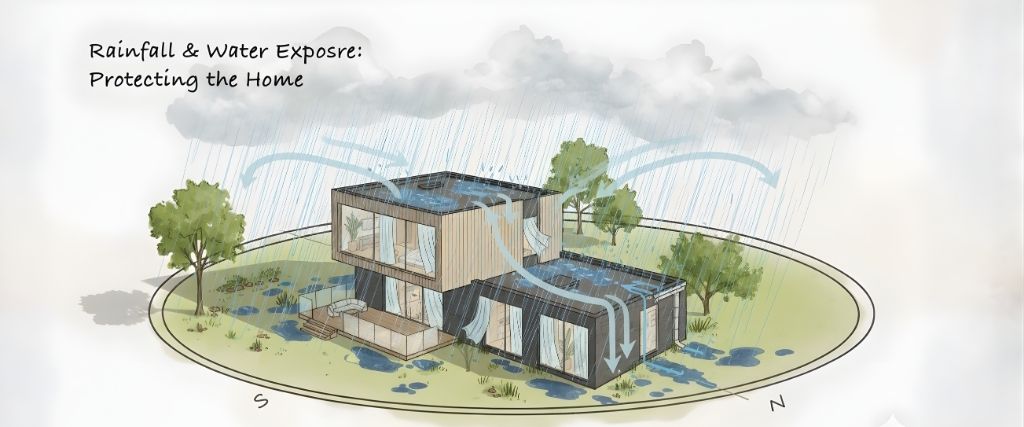
While sunlight and wind shape the comfort and orientation of a home, rainfall shapes its durability, protection, and long-term appearance.
Rain is one of the most powerful agents of weathering. It affects everything from wall strength to paint life, from roof performance to structural safety.
A beautifully designed home can begin to deteriorate rapidly if rainfall behaviour is not understood.
Planning for water is not optional. It is a core responsibility of good exterior design.
3.2 Understanding Rainfall Patterns in India
India experiences diverse rainfall conditions due to monsoon systems and regional geography.
3.2.1 Southwest Monsoon (June to September)
- Primary source of heavy rain
- Affects western coast, central India, and southern peninsula
- Strong winds drive rain horizontally, increasing wall exposure
3.2.2 Northeast Monsoon (October to December)
- Affects Tamil Nadu and southeastern coast
- Requires additional protection on east-facing walls
3.2.3 Localized Storms
- In cities, sudden heavy showers lead to flooding
- Roofs, balconies, and drains must be designed for peak discharge
Understanding these patterns helps determine exterior protection levels and material choice.
3.3 How Rain Impacts the Exterior of a House
3.3.1 Wall Dampness and Seepage
When rainwater enters through:
- cracks
- poor plaster
- unprotected joints
- misaligned pipes
it causes damp walls, mold, and interior damage.
3.3.2 Fading and Peeling of Paint
Continuous moisture weakens paint adhesion.
Homes in high-rain zones need specialized waterproof exterior paints.
3.3.3 Erosion of Plaster and Brick
Wind-driven rain wears down exterior plaster faster, especially on the west and south façades.
3.3.4 Roof Leakage and Damage
Flat roofs are most vulnerable if waterproofing is poor.
Sloped roofs must be designed with the correct angle and overhangs for the local rainfall intensity.
3.4 Designing Roofs for Rain Protection
3.4.1 Sloped Roofs
Ideal for heavy rainfall zones.
Slopes should be:
- 22 to 35 degrees in moderate rainfall
- 35 to 45 degrees in high rainfall areas
3.4.2 Flat Roofs
Must have:
- clear slopes toward drain points
- proper waterproofing membranes
- regular maintenance checks
3.4.3 Roof Overhangs and Chajjas
Deep overhangs protect walls from direct rain impact.
Minimum recommended overhang depth:
- 1.5 to 2 feet in moderate rainfall zones
- 2 to 4 feet in high rainfall areas
3.5 Balcony and Terrace Design for Rainfall
Balconies are common failure points due to faulty slopes.
Important rules:
- Always slope outward (never inward)
- Use drip moulds to force water away
- Provide covered balconies for high rainfall areas
- Use anti-skid flooring
- Ensure proper railing gaps to prevent clogging
Terraces should have multiple drain points to avoid water stagnation.
3.6 Exterior Wall Protection
3.6.1 Waterproof Plaster
Cement-based polymer coatings improve water resistance significantly.
3.6.2 Weather-Proof Paints
Use paints tested for:
- UV resistance
- rain impact
- humidity tolerance
- anti-fungal properties
3.6.3 Stone and Tile Cladding
Adds an extra shield against rain, but must include:
- open joints
- proper sealants
- ventilation gaps
3.6.4 Parapet Wall Design
Poor parapet design is a major cause of leaks.
Important details:
- Proper slope
- Drip moulds
- Capping stones
- Water-tight joints
3.7 Ground-Level and Foundation Protection
3.7.1 Plinth Height
Raising the plinth prevents rainwater splash and reduces seepage.
Standard recommended plinth:
- 1 to 2 feet in low-rain areas
- 2 to 4 feet in heavy-rain regions
3.7.2 Site Drainage
Exterior surface levels should direct water away from the building.
Key rules:
- Never allow water to collect near the foundation
- Use paved pathways with slope
- Install proper stormwater drains
3.8 Landscaping and Rain Management
Proper landscaping protects the structure.
Include:
- French drains
- Rain gardens
- Permeable paving
- Trees that absorb excess water
- Retaining walls for slopes
Avoid:
- Soil piled against exterior walls
- Plants touching the wall surface
- Poorly drained lawns
3.9 Rainwater Harvesting
A well-designed exterior protects the home and supports sustainability.
Harvesting systems include:
- rooftop collection
- underground tanks
- filtration units
- recharge pits
This reduces dependence on groundwater and improves site ecology.
3.10 Summary
Rain is not just a seasonal event; it is a powerful design force.
A home that respects rainfall with proper slopes, waterproofing, drainage, and material choices stays dry, strong, and beautiful year after year.
Rain-related problems like seepage, damp walls, paint peeling, and ceiling leaks can ruin the house regardless of how beautiful it looks. Exterior design must be rain-ready.
Key Design Rules
- Provide proper roof slope
- Install deep chajjas and balcony covers
- Use weatherproof exterior paint
- Keep plinth height raised in flood-prone areas
- Create strong drainage around house boundary
4. Understanding Topography
4.1 Introduction
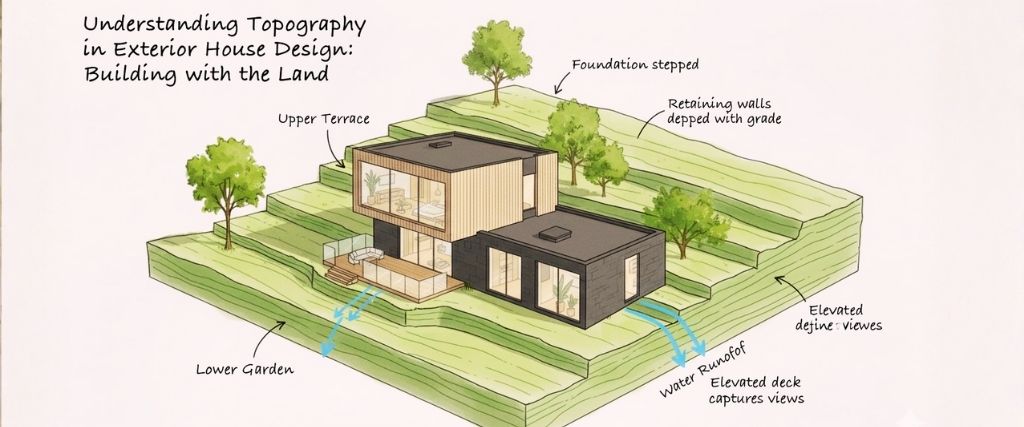
Topography is the shape, slope, and physical character of the land on which a home stands.
While climate forces like Sun, Wind, and Rain influence how a house must be protected, topography decides how the house sits, behaves, and survives on the site.
A plot is never just a flat piece of land.
Its natural height, slope, soil conditions, vegetation, and surrounding terrain affect:
- drainage
- structural design
- foundation safety
- road access
- aesthetics
- landscaping
- cost of construction
Good exterior design begins with reading the land correctly.
4.2 What Is Topography?
Topography includes:
- land slope and gradient
- natural high and low points
- soil depth and type
- existing rocks or boulders
- water flow direction
- surrounding hills or depressions
- natural vegetation
- man-made features nearby
Understanding these elements helps in placing the house in the most stable and aesthetically pleasing way.
4.3 Types of Topography Found in Residential Plots
4.3.1 Flat Land
Easy to build, but may face flooding if drainage is poor.
Requires planned slopes for water runoff.
4.3.2 Sloped Land
Can be upward or downward slope.
Offers beautiful elevation opportunities but demands smart structural planning.
4.3.3 Low-Lying Land
Often waterlogged during monsoon.
Needs raised plinths, drainage solutions, and soil strengthening.
4.3.4 Hilly or Undulating Terrain
Visually stunning but challenging.
Requires retaining walls, terraced landscaping, and strong foundations.
4.3.5 Coastal or Riverbank Land
Soft soil, moisture, and erosion risks.
Needs special waterproofing and resilient materials.
4.4 Why Topography Matters in Exterior Design
4.4.1 Building Stability
Slope and soil type determine how strong and deep foundations should be.
Ignoring topography can lead to cracks, settlement, or structural failure.
4.4.2 Natural Drainage
Water always flows from high to low ground.
Using natural contours reduces drainage problems and prevents waterlogging.
4.4.3 Elevation and Aesthetics
Properly using natural slopes can create:
- walk-out basements
- elevated terraces
- multilevel landscaping
- dramatic façade designs
4.4.4 Sun and Wind Interaction
Topography directly changes:
- the direction of airflow
- the intensity of sunlight
- shadow patterns
- temperature around the home
For example, homes on the south slopes get more heat, while valley homes stay cooler but more humid.
4.4.5 Construction Cost
Flat land is cheaper.
Sloped or rocky land increases:
- excavation costs
- foundation reinforcement
- retaining walls
- waterproofing requirements
Understanding topography helps avoid unnecessary expenses.
4.5 Designing with Land Slope
4.5.1 Building Along the Slope
This approach reduces cutting and filling of land.
The building steps down naturally with the terrain.
4.5.2 Building Against the Slope
Creates strong retaining walls and elevated plinths.
More expensive but sometimes necessary.
4.5.3 Water Flow Management
Every sloped plot needs:
- contour drains
- side drains
- open channels
- ground shaping
- rainwater harvesting pits
These prevent erosion and protect exterior walls.
4.6 Soil Type and Its Impact
4.6.1 Clay Soil
Retains water, expands, and contracts.
Needs strong foundations and good surface drainage.
4.6.2 Sandy Soil
Good drainage but low strength.
Requires wide footings and soil stabilization.
4.6.3 Rocky Soil
Very stable and long-lasting.
Excavation is difficult but foundation cost reduces.
4.6.4 Black Cotton Soil
Common in Maharashtra.
Highly swelling and shrinking.
Needs special foundations and careful plinth design.
4.7 Using Topography for Beautiful Exterior Design
4.7.1 Terraced Gardens
Works beautifully on slopes and improves usability.
4.7.2 Elevated Platforms
Raise the building naturally, improving visual appeal and ventilation.
4.7.3 Natural Stone Retaining Walls
Blend strength with rustic aesthetics.
4.7.4 Multi-Level Architecture
Creates dynamic façades and better integration with nature.
4.7.5 Water Features
Streams, ponds, cascades, and rain gardens can follow natural slopes.
4.8 Hazards to Consider Based on Topography
Every plot has risks.
4.8.1 Landslides
In hilly areas with steep slopes.
4.8.2 Soil Erosion
Especially in regions with heavy rainfall.
4.8.3 Flooding
In low-lying areas or basins.
4.8.4 Foundation Settlement
Common in loose or highly plastic soils.
Awareness of these hazards helps in making the right design and material choices.
4.9 Summary
Topography is the silent foundation of all exterior design decisions.
It influences how the house stands, how long it lasts, and how it interacts with natural forces around it.
A design that respects the land stays stable, safe, and naturally beautiful.
5. Plot Orientation & Site Planning
5.1 Introduction
Once the natural forces and topography are understood, the next critical step is deciding how to place the house on the plot.
Plot orientation determines:
- sunlight entry
- airflow
- heat gain
- privacy
- view
- access
- building form
- outdoor space planning
Good site planning transforms a simple piece of land into a comfortable and efficient living environment.
5.2 What Is Plot Orientation?
Plot orientation refers to the direction the plot faces in relation to the four cardinal directions:
North, South, East, and West.
This directly affects:
- which walls get maximum sunlight
- which side remains cool
- where the breeze flows
- how to plan openings and elevations
- how shadows fall throughout the day
In exterior design, orientation is one of the most powerful tools available.
5.3 Understanding the Four Directions in Design
5.3.1 East
- Receives gentle morning sunlight
- Ideal for bedrooms, sit-outs, gardens
- Supports healthy waking cycles
5.3.2 West
- Harsh afternoon heat
- Exterior walls fade faster
- Needs shading, trees, or vertical louvers
5.3.3 South
- Maximum heat exposure in India
- Best for service areas, staircases, and protected walls
- Needs deep overhangs and insulated materials
5.3.4 North
- Coolest direction with soft, diffused light
- Ideal for working areas, study rooms, and large windows
Understanding these traits helps place the right rooms on the right sides.
5.4 The Importance of Site Planning
A site is not just the land beneath the house. It includes:
- the surroundings
- access road
- natural contours
- breeze direction
- noise sources
- privacy elements
- views and landscape
Site planning is about aligning the house with all these contextual elements.
5.5 Key Principles of Site Planning
5.5.1 Positioning the House on the Plot
The building can be placed:
- centrally
- towards one side
- towards the rear
- elevated above the ground
Placement depends on:
- sunlight optimization
- privacy needed
- approach direction
- natural contours
- rainwater management
5.5.2 Setbacks and Open Spaces
Open spaces should serve a purpose, not just follow norms.
For example:
- North and East setbacks work best for gardens
- South setbacks reduce heat absorption
- West setbacks protect from afternoon sun and allow ventilation gaps
5.5.3 Entrance and Access Pathways
Entrances should be:
- easily visible
- well-lit
- protected from rain
- placed on the cooler, wind-friendly side if possible
5.5.4 Outdoor Functional Zones
Sites should include:
- gardens
- parking
- utility spaces
- sit-outs
- water tanks
- septic systems
- storage and service areas
Good planning avoids clutter and makes the exterior look organized.
5.6 Using Climate Data for Orientation
This combines your first three chapters.
In hot regions:
- minimize west openings
- use lighter exterior colors
- place shaded courtyards
In windy coastal areas:
- maximize openings facing breezes
- plant wind-filtering trees
In heavy rainfall regions:
- increase plinth height
- use sloped roofs
- keep entrances on protected sides
In hilly terrain:
- align the house with the slope
- trap warm sun and block cold winds
Orientation must respond to the local climate, not just the compass.
5.7 Integrating Topography with Plot Orientation
A well-planned house respects both direction and terrain.
Examples:
- A house on a north-facing slope gets cooler air.
- A south-facing slope may need more shading.
- A hilltop home needs wind protection.
- A valley home needs drainage care.
Design choices emerge from the land itself.
5.8 Landscaping Based on Orientation
Plants and trees support orientation decisions.
For example:
- Tall trees on the west block heat
- Medium shrubs on the south break wind flow
- Flower beds on the east thrive in morning light
- Shade trees on the north create comfortable sit-out areas
Landscaping completes the exterior environment.
5.9 Mistakes to Avoid
- Placing major windows on the west without protection
- Forgetting cross-ventilation paths
- Ignoring road approach while designing elevation
- Blocking natural water flow with incorrect placement
- Making all sides flat without using slope advantage
- Not planning drainage around the building boundary
Smart orientation prevents most long-term problems.
5.10 Summary
Plot orientation and site planning translate natural forces into practical design decisions.
A home aligned with the Sun, Wind, Rain, and Terrain becomes efficient, beautiful, comfortable, and long-lasting.
Placement Principles
- Keep open spaces on the east and north
- Plant tall trees on the west side
- Avoid blocking natural drainage paths
- Align the house with wind flow direction
- Keep parking areas shaded and easily accessible
6. Climate Zones of India
6.1 Introduction
Climate is the master blueprint that determines how a house should be designed from the outside.
Every material, colour, shading device, slope, opening, and elevation choice must respond to the local climate.
A home designed without climate consideration may look attractive, but it will not perform well.
Climate decides:
- how hot or cold the house feels
- how much light enters
- how much rain hits the walls
- how fast exterior fades
- how much energy the house consumes
- how comfortable outdoor spaces remain
In India’s diverse climate, no single design works everywhere. Exterior design must adapt.
6.2 Understanding Climate vs Weather
Before designing, homeowners must know the difference.
Weather
Daily conditions – hot today, windy tomorrow, raining in the evening.
Climate
Long-term weather pattern of a region shaped by:
- temperature
- humidity
- rainfall
- wind
- sunlight
Exterior design decisions must be based on climate, not weather.
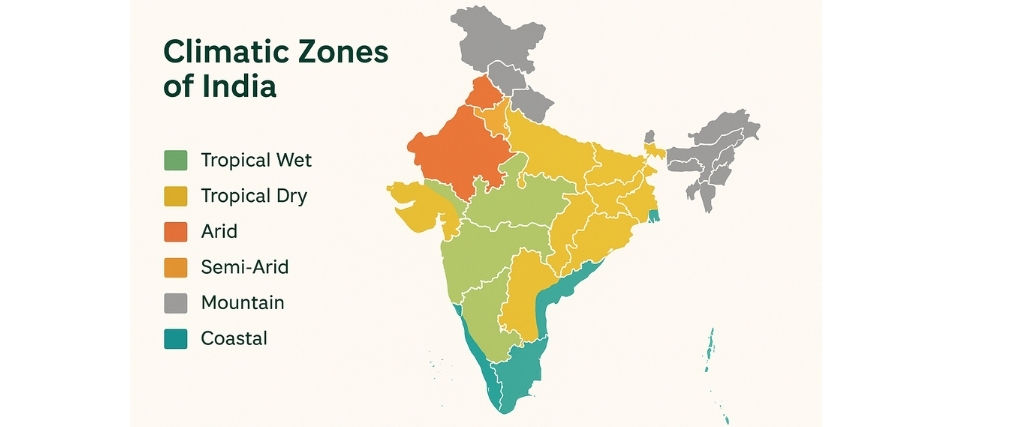
6.3 India’s Five Major Climate Zones
India has one of the broadest climatic ranges, which directly affects exterior architecture.
6.3.1 Hot and Dry Climate
Regions: Rajasthan, parts of Gujarat, central Maharashtra
Characteristics:
- extreme heat
- low humidity
- high sunlight
Design Response: - thick exterior walls
- light-coloured facades
- small west-facing openings
- shaded courtyards
- deep chajjas and verandahs
6.3.2 Warm and Humid Climate
Regions: Coastal areas – Kerala, Goa, Mumbai, Chennai
Characteristics:
- high humidity
- warm air
- heavy rain
Design Response: - maximum cross ventilation
- sloped roofs
- moisture-resistant materials
- large shaded openings
- elevated plinths
6.3.3 Composite Climate
Regions: New Delhi, Hyderabad, Pune, Nagpur, most Indian cities
Characteristics:
- hot summers
- cold winters
- strong monsoon
Design Response: - moderate shading
- balanced window sizes
- adaptable façade treatments
- good insulation and ventilation
6.3.4 Temperate Climate
Regions: Bangalore, parts of the Deccan plateau
Characteristics:
- mild temperatures
- moderate humidity
Design Response: - flexible design
- large openings possible
- greenery integrated into façades
6.3.5 Cold and Snow-Bound Climate
Regions: Himachal, Uttarakhand, Kashmir, Northeast hills
Characteristics:
- low temperatures
- snowfall
- reduced sunlight during winter
Design Response: - south-facing glazing
- thermal insulation
- sloped roofs for snow
- thick walls
- compact building form
Understanding the climate zone helps choose correct materials and designs.
6.4 Climate and Exterior Behaviour
6.4.1 Heat Gain
Hot climates require:
- reflective exterior colours
- insulated roofs
- shaded openings
- ventilated attics
Cold climates require:
- sun-facing openings
- heat-retaining materials
- compact building shapes
6.4.2 Humidity and Moisture
Humid areas promote:
- dampness
- mold
- peeling paint
Solutions: - breathable plaster
- moisture-resistant materials
- cross-ventilation
- sloped roofs
6.4.3 Rainfall Impact
Heavy rainfall zones require:
- strong waterproofing
- deep roof overhangs
- bigger drainage systems
Dry climates need less rain protection but more heat control.
6.4.4 Wind Patterns
Climate determines prevailing winds.
Design must leverage cool breezes and block harsh winds.
6.4.5 Seasonal Variation
Regions with extreme seasons need adaptable design:
- shading devices for summer
- sun access in winter
- flexible ventilation
- multi-layered façades
6.5 Selecting Materials Based on Climate
Each climate needs specific materials.
Hot and Dry:
- sandstone
- light-coloured paints
- AAC blocks
- terracotta tiles
Humid and Coastal:
- weatherproof cement boards
- stainless steel elements
- anti-fungal exterior paints
- UPVC or FRP doors and windows
Composite:
- balanced thermal insulation
- high-quality exterior paints
- ventilated façades
Cold:
- double-glazed windows
- stone cladding
- wood-based materials (treated)
- insulated walls
Choosing wrong materials leads to cracks, fading, or fast deterioration.
6.6 Architectural Responses for Different Climates
Hot Climate Architecture
- inward-looking designs
- courtyards
- shaded façades
- thick walls
Humid Climate Architecture
- well-ventilated open designs
- high plinths
- wide verandahs
- pitched roofs
Cold Climate Architecture
- minimal openings on cold wind sides
- south-facing large windows
- layered insulation
- steep sloped roofs
Composite Climate Architecture
- hybrid designs
- adjustable shading
- moderate openings
- balanced materials
6.7 Landscape Design According to Climate
Plants behave differently in each climate.
Hot regions:
- use dense trees on west
- reflective paving avoided (causes glare)
Humid regions:
- allow airflow under raised floors
- avoid water-logging around walls
Cold regions:
- evergreen trees block cold winds
- deciduous trees allow winter sun
Composite:
- mixed landscaping
- shade + airflow balanced
6.8 Climate Change and Modern Exterior Design
Climate is no longer fixed. Rising temperatures, unpredictable rains, and stronger winds require:
- energy-efficient design
- green roofs
- solar integration
- rainwater harvesting
- heat-reflective materials
- passive cooling strategies
Homes must be designed not only for today’s climate but tomorrow’s.
6.9 Summary
Climate is the overarching force that controls exterior design decisions.
It influences wall placement, roof shapes, landscape, colour choices, ventilation strategies, and building form.
A home designed according to climate is comfortable, durable, and energy-efficient — and remains beautiful for decades.
7. Sustainability in Exterior House Design
7.1 Introduction
Sustainability is no longer an optional concept in architecture—it is a necessity.
A sustainable exterior design reduces energy use, conserves resources, improves comfort, and minimizes long-term maintenance.
Instead of fighting nature, sustainable architecture works with natural forces like sun, wind, rain, and terrain.
A sustainable home:
- stays cooler in summer
- stays warmer in winter
- uses less electricity
- saves water
- lasts longer
- stays healthier for its occupants
This chapter explains how exterior design can make a home environmentally responsible and economically efficient.
7.2 What Is Sustainable Exterior Design?
Sustainable design means making choices that reduce the house’s impact on the environment while improving human comfort.
It includes:
- energy-efficient design
- use of eco-friendly materials
- natural ventilation
- rainwater management
- heat control
- waste reduction
- long-lasting building components
Sustainability begins on the outside, before the first brick is laid.
7.3 The Pillars of Sustainability in Exterior Design
7.3.1 Energy Efficiency
Maximizing natural light and ventilation reduces dependence on artificial cooling and lighting.
7.3.2 Water Conservation
Collecting, storing, and reusing rainwater reduces pressure on groundwater.
7.3.3 Material Efficiency
Using durable, low-energy, and locally available materials reduces waste.
7.3.4 Climate Responsiveness
Designing according to local climate zones prevents heat gain, humidity, and energy loss.
7.3.5 Longevity & Low Maintenance
A sustainable design lasts long, reducing the need for repairs or replacements.
7.4 Passive Design Strategies
Passive design means using natural forces instead of mechanical systems.
7.4.1 Passive Cooling
- orientation to capture breezes
- cross ventilation
- shaded openings
- ventilated roofs
- double-skin façades
7.4.2 Passive Heating
- south-facing glass in cold regions
- thermal mass walls
- compact building shape
7.4.3 Natural Daylighting
- skylights
- courtyard light wells
- north-facing windows for glare-free light
Passive techniques significantly cut electricity bills.
7.5 Sustainable Exterior Materials
Choosing the right materials improves durability and reduces environmental impact.
7.5.1 Locally Available Materials
- stone
- brick
- clay blocks
- laterite
These reduce transport energy and blend with local climate.
7.5.2 Renewable Materials
- bamboo
- treated wood
- terracotta
- natural plasters
7.5.3 Recycled Materials
- recycled metal
- reclaimed wood
- fly-ash bricks
- recycled tiles
7.5.4 Low-Carbon Materials
- lime plaster
- AAC blocks
- CEB (Compressed Earth Blocks)
These reduce CO₂ emissions during production.
7.6 Sustainable Roof Design
7.6.1 Cool Roofs
Roofs coated with reflective paint reduce indoor heat by 5–8°C.
7.6.2 Green Roofs
Plants on rooftops provide:
- insulation
- rainwater absorption
- reduced urban heat
7.6.3 Solar Roofs
Solar panels convert the hottest part of the exterior into an energy source.
7.6.4 Sloped Roofs for Water Management
Encourage efficient rainwater harvesting and prevent leakage.
7.7 Sustainable Landscaping
Landscaping is a powerful tool in sustainable design.
7.7.1 Native Plants
Require less water, grow faster, and support biodiversity.
7.7.2 Shade Trees
Reduce heat on west and south walls.
7.7.3 Permeable Paving
Allows rainwater to seep into the soil and recharge groundwater.
7.7.4 Water Features Using Recycled Water
Enhances microclimate without wasting fresh water.
7.7.5 Green Boundaries
Hedges and green fences reduce dust and heat.
7.8 Water Sustainability Measures
7.8.1 Rainwater Harvesting
- rooftop collection
- filtration units
- storage tanks
- recharge pits
7.8.2 Greywater Recycling
Reuse bathroom and basin water for:
- gardening
- washing outdoor floors
- toilet flushing
7.8.3 Smart Drainage
Sloped site planning prevents flooding and soil erosion.
7.9 Waste Reduction in Construction
Sustainable exterior works minimize waste during and after construction.
Strategies:
- modular planning
- recycled aggregates
- reusable shuttering
- prefabricated wall panels
- efficient cutting patterns for stone/tiles
Less waste = lower cost + cleaner environment.
7.10 Reducing Heat Island Effect
Urban areas trap heat due to concrete and asphalt.
Sustainable exteriors reduce this by:
- using reflective surfaces
- planting trees
- adding water bodies
- using lighter colours
- ventilated façade designs
This makes the home cooler and the neighbourhood healthier.
7.11 Long-Term Benefits of Sustainable Exterior Design
A sustainable house provides:
Economic Benefits
- lower electricity bills
- reduced maintenance cost
- fewer repairs
- longer building life
Environmental Benefits
- less energy consumption
- reduced carbon footprint
- water conservation
Human Comfort Benefits
- healthier indoor air
- cooler temperatures
- better daylight
- quiet, peaceful surroundings
7.12 Summary
Sustainability is not a trend—it is the foundation of modern exterior design.
A sustainable exterior respects natural forces, reduces energy loss, uses smart materials, and ensures comfort for decades.
Such a home is future-ready, environmentally responsible, and economically efficient.
8. Exterior Materials & Their Performance
8.1 Introduction
Exterior materials decide the lifespan, appearance, and maintenance cost of a house.
Choosing the right material is not only about beauty—it is about performance against heat, wind, rain, and time.
Material selection should match:
- climate
- budget
- durability
- maintenance needs
- architectural style
8.2 Types of Exterior Materials
8.2.1 Natural Materials
- Stone (granite, sandstone, slate)
- Brick
- Wood
These offer rich texture, long life, and blend with the environment.
8.2.2 Synthetic Materials
- Cement boards
- Fiber-reinforced panels
- uPVC cladding
- Metal composite panels
Modern, lightweight, and faster to install.
8.2.3 Hybrid Materials
- Brick + plaster
- Stone + paint
- Metal + wood elements
Create a balanced façade with improved performance.
8.3 How Climate Affects Materials
Different materials behave differently under climate stress.
Hot Climate
- Stone stays cool
- Terracotta performs well
- Light-coloured paints reflect heat
Humid / Coastal Climate
- Moisture-resistant cement boards
- Anti-fungal paints
- uPVC windows (do not rust)
Cold Climate
- Wood performs well due to insulation
- Stone cladding protects structural walls
Composite Climate
- Cement plaster + weatherproof paint
- Insulated roof layers
8.4 Material Durability Factors
Before selection, evaluate:
- UV resistance
- water absorption
- expansion and contraction
- thermal strength
- impact resistance
- maintenance cost
Exterior materials must withstand climate cycles for decades.
8.5 Modern High-Performance Materials
- HPL (High Pressure Laminate)
- WPC (Wood Plastic Composite)
- Ventilated façade panels
- Prefinished metal panels
These are low-maintenance and visually striking.
8.6 Summary
Right materials protect the house, reduce maintenance, and shape the elevation.
Material choice should always follow climate, budget, and long-term performance needs.
9. Elevation Design Principles
9.1 Introduction
The elevation is the “face” of your house.
It reflects personality, function, and harmony with surroundings.
A good elevation is not just about looks—it balances:
- proportion
- symmetry
- materials
- climate response
9.2 Key Elements of Elevation
9.2.1 Massing
Overall building shape:
- rectangular
- L-shape
- U-shape
- multi-level
Massing should complement plot size and topography.
9.2.2 Proportion
Balanced window-to-wall ratio creates visual harmony and climate comfort.
9.2.3 Texture
Combining smooth and rough surfaces adds depth:
- stone + plaster
- wood + metal
- tiles + glass
9.2.4 Lines and Geometry
Horizontal lines make the house look wider.
Vertical lines make it look taller.
9.3 Climate-Responsive Elevation
Hot Regions
- deeper overhangs
- minimal west openings
- shaded balconies
Humid Regions
- sloped roofs
- open verandahs
Cold Regions
- compact shape
- south-facing glazing
9.4 Lighting in Elevation
Exterior lighting highlights:
- textures
- pathways
- façade features
Use warm lights for elegance and cool lights for modernity.
9.5 Summary
Elevation is a mix of beauty and engineering.
A well-designed elevation is climate-friendly, visually proportionate, and long-lasting.
10. Landscaping, Vegetation & Outdoor Planning
10.1 Introduction
Landscaping completes the house.
It enhances comfort, climate performance, privacy, and aesthetics.
Good landscaping is not decoration—it is outdoor architecture.
10.2 Types of Landscape Elements
10.2.1 Softscape
- trees
- shrubs
- lawn
- flower beds
10.2.2 Hardscape
- pathways
- retaining walls
- patios
- pergolas
10.2.3 Water Features
- ponds
- fountains
- rain gardens
10.3 Climate-Based Plant Selection
Hot Regions
- neem
- peepal
- gulmohar
- banyan
Humid Regions
- coconut
- palm varieties
- frangipani
Cold Regions
- pine
- fir
- cedar
10.4 Functional Landscaping
Proper planting can:
- block heat
- filter wind
- reduce noise
- increase privacy
Example:
- tall trees on west side
- shrubs on south
- open lawn on east
10.5 Outdoor Spaces
- sit-outs
- patios
- pergolas
- garden seating
- meditation corners
- children’s play area
These spaces make the exterior usable and beautiful.
10.6 Summary
Landscaping brings nature into architecture.
It improves climate comfort, aesthetics, and outdoor lifestyl
✅ Builder / Architect Tips (Landscaping)
- Plant tall trees on the west to block evening heat.
- Avoid planting creepers directly on walls (causes dampness).
- Keep open lawn on the east for morning light.
- Use permeable pavers to recharge groundwater.
- Add a rain garden near the low point of the plot to manage runoff.
11. Exterior Colour Psychology & Aesthetic Strategy
11.1 Introduction
Colours influence mood, temperature perception, and overall house personality.
Exterior colour choice requires:
- climate understanding
- material compatibility
- elevation style
11.2 Colour and Climate
Hot Regions
- whites
- creams
- pastels
Reflect sunlight and reduce heat.
Humid Regions
- earthy tones
- medium shades
Hide stains and moisture marks.
Cold Regions
- warm tones
- browns
- reds
Make the house feel warmer.
11.3 Colour Psychology
White
Clean, spacious, pure.
Grey
Modern, sophisticated.
Beige & Cream
Soft, warm, timeless.
Brown
Natural, earthy, grounded.
Bold Colours (blue, green, red)
Use for accents only.
11.4 Creating a Balanced Palette
A good exterior palette follows a 3-layer strategy:
- Base Colour (major walls)
- Secondary Colour (balconies, frames)
- Accent Colour (railings, entrance door, trims)
This creates harmony.
11.5 Summary
Colours are not just visual—they influence climate performance, elevation clarity, and emotional impact.
✅ Builder / Architect Tips (Colours)
- Don’t use more than 3 colours on the exterior.
- Test your paint sample in morning + afternoon + evening light before finalizing.
- Avoid very dark shades on sun-exposed walls — they fade faster.
- Use texture paint only on protected walls (avoids dust sticking).
- Wooden accents should stay minimal, not overpowering.
Conclusion
Exterior house design is a blend of science and creativity. When you consider the sun, wind, rain, soil, climate, materials, elevation, and colour psychology together, you create a home that looks beautiful, performs efficiently, and lasts for decades. A well-designed exterior is not just attractive — it protects the house, reduces energy bills, and improves the quality of life for everyone living inside.
This guide brings together everything a homeowner, architect, or builder needs to understand before planning or building a home in India. Think of it as a checklist for designing a comfortable, durable, and climate-friendly house exterior.
Frequently Asked Questions About Exterior House Design
Common Mistakes That Reduce the Life of a House Exterior
1. Ignoring sun direction when placing windows
Leads to overheating and glare.
2. Using too many exterior materials
Makes the elevation look cluttered and cheap.
3. No slope on flat roofs
Causes waterlogging and leakage.
4. Building on natural drainage paths
Leads to flooding and foundation cracks.
5. Using dark exterior colours in hot climates
Increases heat absorption and fades quickly.
6. Poor waterproofing around parapet walls
This is the number one source of terrace leakage.
7. Planting trees too close to exterior walls
Roots damage plinth and moisture enters walls.
8. Not providing deep overhangs on south and west elevations
Walls get baked by sunlight, raising interior heat.
9. Using cheap metal railings in coastal regions
They rust quickly — use stainless steel or uPVC instead.
10. Ignoring wind direction
House becomes stuffy and uncomfortable even if it looks premium.